
Why do your summer tops keep coming out the wrong size?
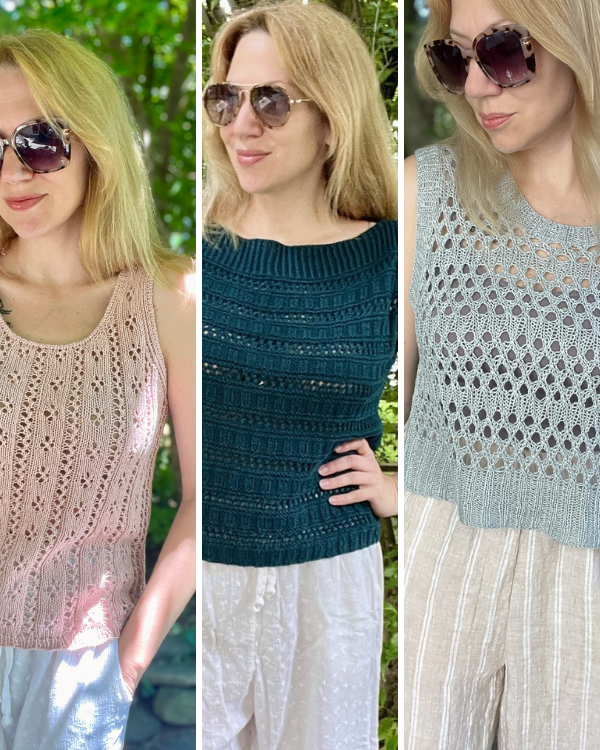
Is it just me?
As we’re finishing up (yay!) the summer knitting season, I’ve noticed that I’ve struggled far more to get the sizing right on my summer knits than I ever do with my cozy wool sweaters.
If this sounds like you, I have a few ideas (in retrospect!) about why this might be happening and what you can do to fix it—for next summer!
Here’s what I think the big issue is: cotton and linen are NOT wool! They don’t behave like wool: they’re not elastic, they feel different in your hand, and they block out differently. And that means you may need to take a different approach to both swatching and knitting. There are also some tangential issues that might also impact fit, so read on!
Make a bigger swatch.
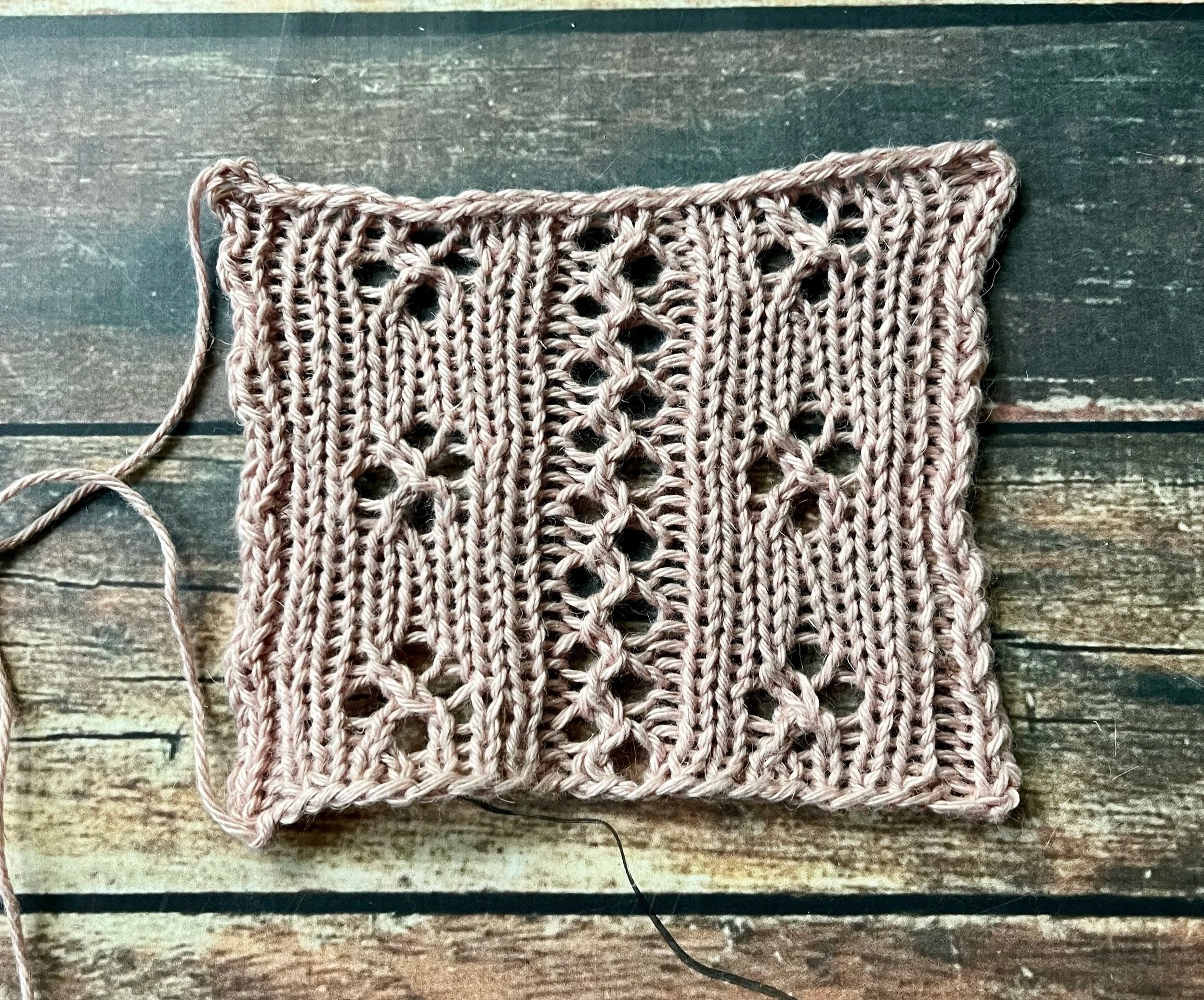
Baby swatch
Needs to be bigger!
First, to get a clearer picture of how your cotton, linen or other summer fiber is going to behave, a 4” swatch, I’m sorry to say, probably isn’t enough, especially if you’re working something really open, like a lace pattern. A swatch simply doesn’t have a the weight of a full garment, which is considerable even for a sleeveless top, and that weight is going to have a much greater impact on cotton, linen, etc., than it does on wool. In addition, a bit of stretch in your swatch may turn into a LOT of stretch in your finished garment that you weren’t anticipating. A bigger swatch isn’t a catchall solution, but it may help. In addition…
Pay more attention to your row gauge.
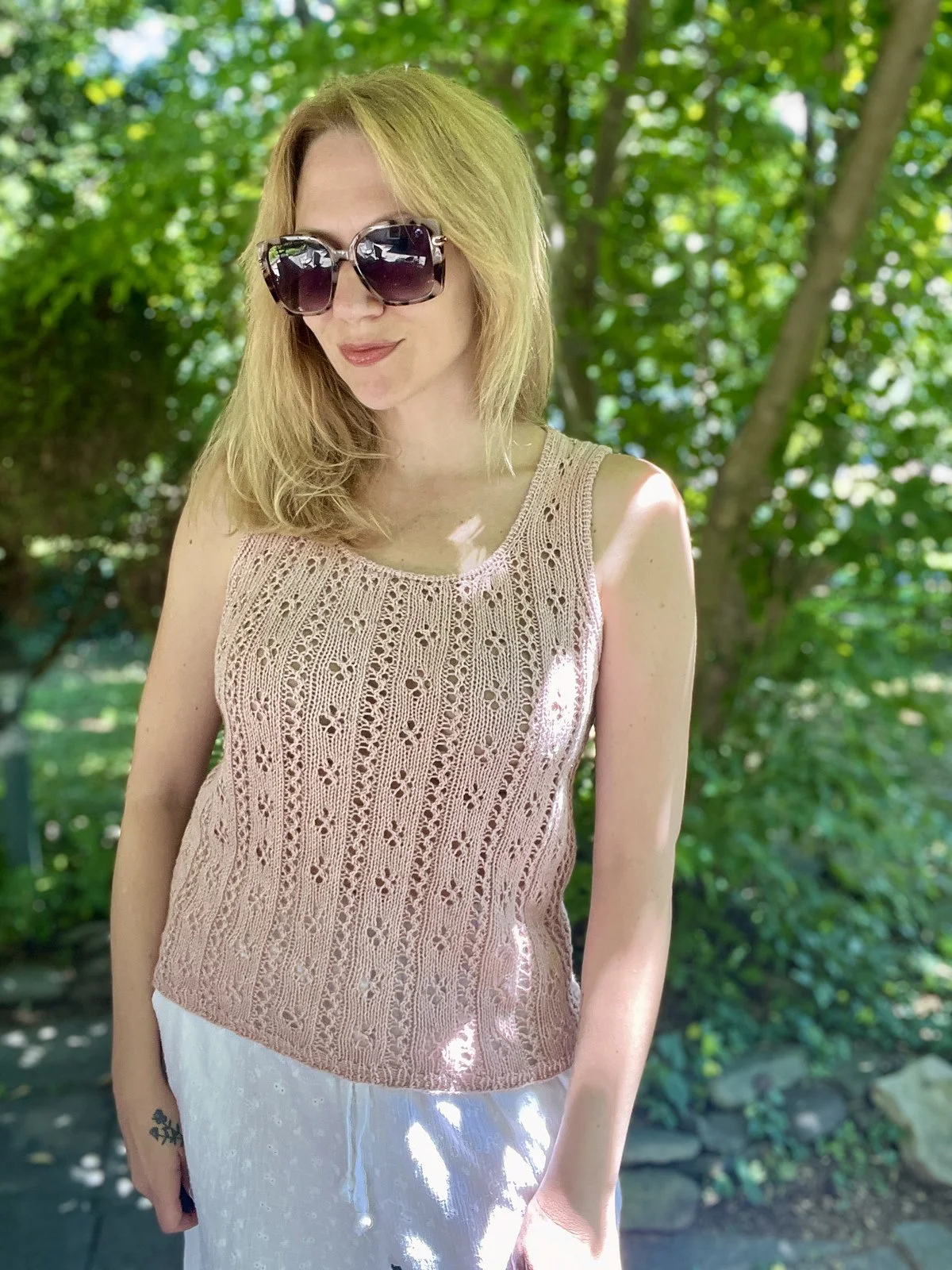
Petite Pointelle
Longer than I intended
We can often get away with ignoring row gauge in wool garments because minor differences aren’t very consequential. So what if your sweater is a half inch longer or shorter? But with summer fibers, those minor differences can have a big impact because, again, the lack of elasticity and bounce is working against you. Minor row gauge differences can quickly grow into big ones once a garment is washed blocked, partially because …
There’s no bloom.

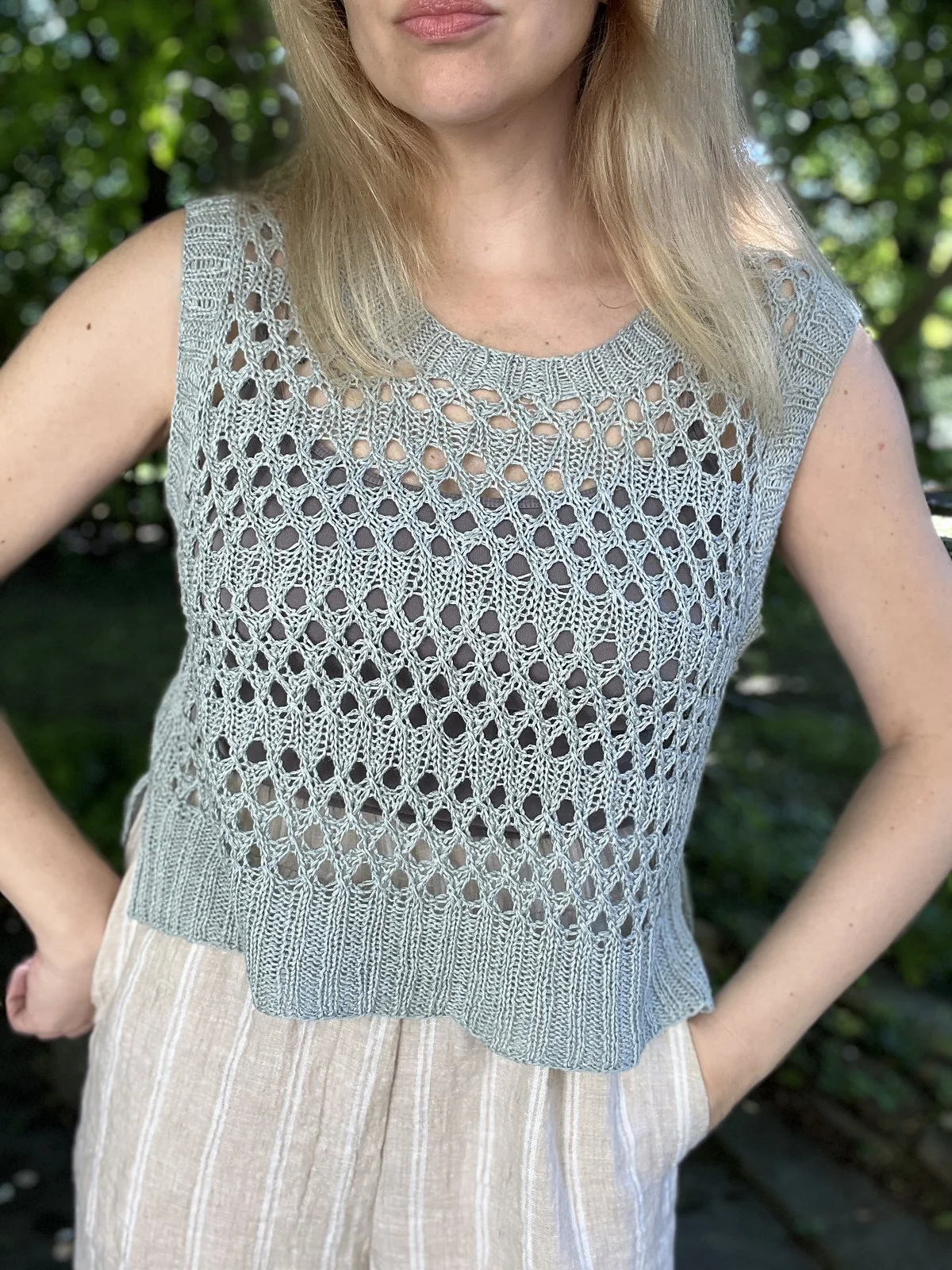
Sailor Swift
Love to see my entire bra through my shirt
Your cotton and linen are not going to bloom like wool. You really need a tighter gauge with these fibers because space between stitches is not going to fill in with wooly fluff when you block. It’s going to sag. Unfortunately, because we want light drapey garments in summer, a lot of patterns are designed at a loose gauge that looks nice at first but becomes sheer, saggy and shapeless over time. This goes against everything I believe in buuuuut … consider tightening up your gauge and knitting a larger size, especially if the original sample was knit in wool and you’re swapping in a summer fiber. Not to mention …
Ribbing doesn’t rib.
Rota Top
Ribbing isn’t pulling in AT ALL
Ribbing in cotton, linen and summer fibers is largely decorative. It simply does not expand and contract the way wool ribbing does. So if you’re counting on that ribbed collar to pull your neckline in, you may be in for a surprise. It will certainly close things up some, but not to the degree you would see in a wool sweater. For a bit more ribbing action, consider dropping another needle size (ie, if you usually go down 1, go down 2). Just remember to use a very elastic cast on or bind off because, again, no stretch. And while you’re at it …
Take care with wet blocking.
You may be tempted to skip wet blocking with these fibers but ultimately you ARE going to have to wash your garment because you’re wearing it next-to-skin in a hot sweaty summer, so you may as well start as you mean to go on. But you really want to take care not to let the weight of the water stretch your garment out at any point in the process. It will not shrink back. I’m somewhat careless with soaking and wringing out my wooly garments because wool is so resilient, but summer fibers, especially thinner ones, need to be treated more delicately. Don’t wring the fabric, try not to bunch it up and again, never let wet cotton or linen hang. Another thing to consider is…
You’re probably knitting differently.
Cotton, linen, and silk feel different in your hand and that means you’re probably holding and knitting with these yarns differently and you likely don’t even notice. But just because you don’t notice doesn’t mean it won’t impact your gauge, especially over a large garment, with the weight of that material in your hands. What can you do about it? Keep checking your gauge to make sure it’s staying on track. Check your gauge before you block your swatch so you can compare that with your unblocked garment and be able to catch discrepancies right away. Some people also switch to wooden needles for these kinds of yarns, but personally, I’m not buying another set just for a few summer tops!
And lastly …
Adjust your patterns.
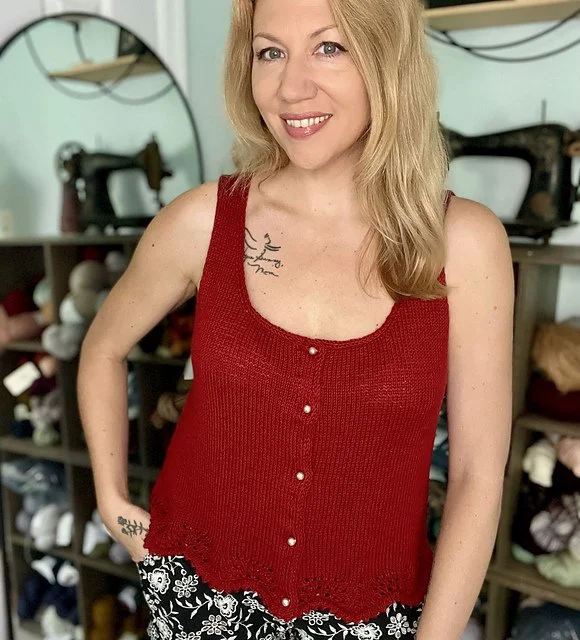
Darjeeling
Added a second sewn seam at the shoulder to fix too-long armholes
Some designers unfortunately haven’t gotten the memo, but armhole depth should be shorter on garments without sleeves! Check your pattern schematic and adjust that depth as needed so your entire bra isn’t showing out the side. You still want a bit of wiggle room so the bottom of the armhole isn’t right up in your armpit, but you don’t need nearly as much ease here as you do in a sweater.
What do you think—are summer garments harder to fit?