
Does size matter? Thoughts on knitting pattern length.
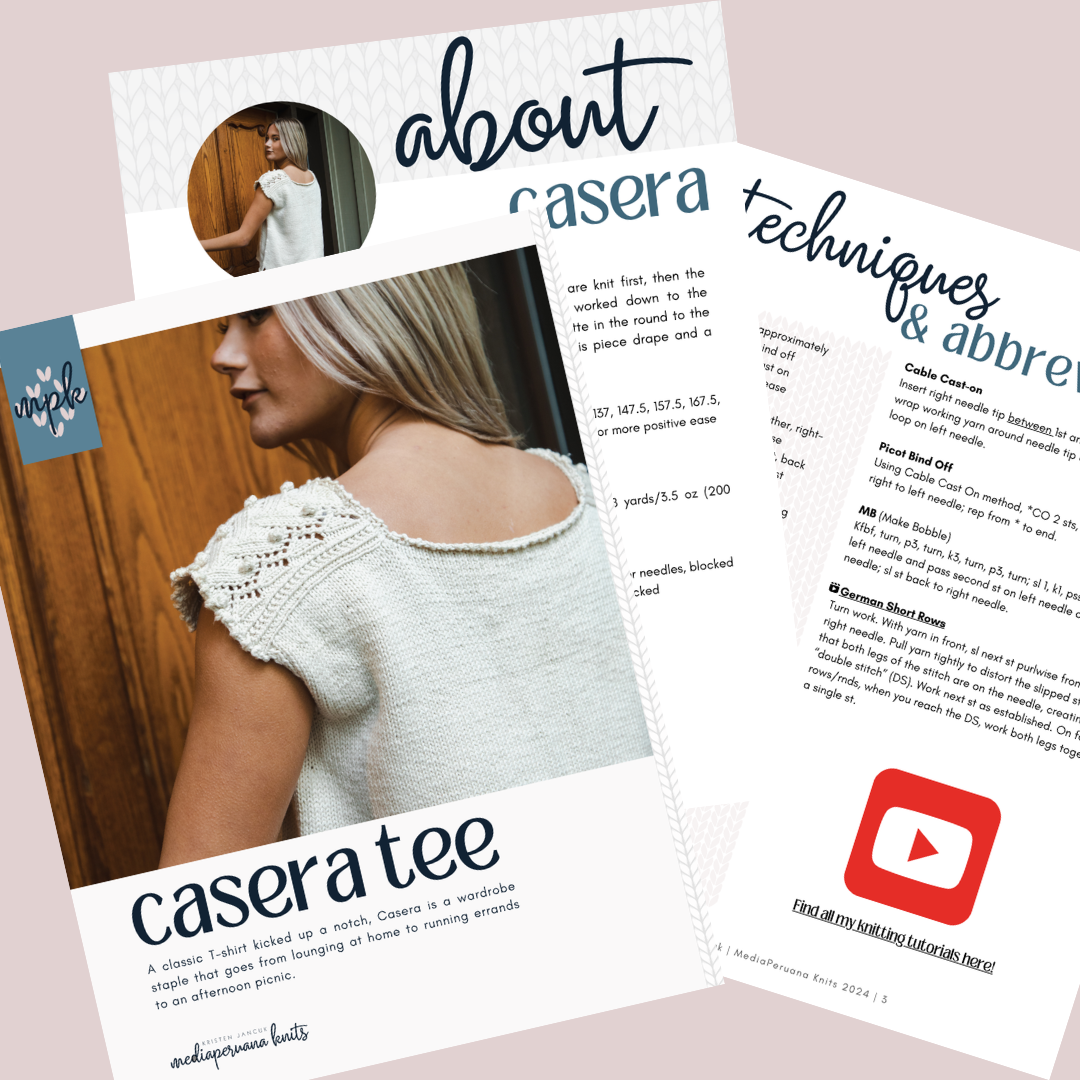
I recently bought and worked through a sock pattern from a designer who, from the looks of it, has been publishing patterns for about 6 years. It was nine pages long. NINE! For a sock pattern! And a relatively simple one: no charts, no novel construction techniques, nothing particularly out of the ordinary.
So why was it nine pages?
Because nearly all the instructions were written out line by line, particularly the heel shaping. Extra details were thrown in to explain how to arrange stitches based on whether you were using DPNs or magic loop. Wordier explanations were included to explain where you were in the process, how many stitches you should have and what that next step would be—before the actual instructions were given.
As someone who has been knitting for nearly 20 years, I began knitting just as digital patterns were becoming available. They were certainly an improvement over vintage patterns that included gems like “reverse shaping for opposite side,” but still tended to be concise and compact.
Digital patterns evolved from print patterns, which necessarily had to take up as little space as possible. For better or worse, they used lots of abbreviations, repetitions and concise language, sometimes accompanied by charts for which written instructions were rarely provided.
Two decades later, patterns have, of course, evolved. There are no print publishing constraints and the majority of knitters are reading patterns on screens rather than printing. Charts are often accompanied by written instructions, video tutorials pop up with a click for advanced techniques, repetitions are written out to avoid confusion, and even standard pattern abbreviations are sometimes abandoned in favor of plain language.
So what’s the problem?
For those of us “trained” to knit on the more concise patterns, the amount of text in modern patterns can feel overwhelming or off-putting. I don’t want or need to read every line, I just need to be told what to do and how many times to do it! I want to memorize the steps and consult the pattern as needed, not have to be glued to it to make progress.
On the other hand, designers who have been writing patterns in this concise style for several decades (cough, including me) are naturally continuing to do so, confounding newer knitters who aren’t used to this more compact style and prefer explicit line-by-line instructions and more details.
A generational divide, but make it knitting.
There is, of course, no right or wrong, just different ways of doing the same thing that appeal to different types of knitters.
But maybe we should start including warning labels.
WARNING: Pattern written for middle aged knitters who want you to just GET TO THE POINT!
WARNING: Pattern written for new knitters who haven’t yet memorized 20 years’ worth of techniques and need a bit more support.
Do you have a preference for pattern length or style? Is there any way we can bridge this gap and make both types of knitters happy?